 English
 Español
Electrical Discharge Machining (EDM) is widely used for machining hard, electrically conductive materials and complex geometries that can be difficult to produce with conventional cutting tools. However, EDM is not a single machining method. Wire EDM, Sinker EDM and Small Hole EDM use the same basic principle of controlled electrical discharge, but they are designed for very different workpiece geometries and production requirements.
For manufacturers, mold makers and precision machining companies, choosing the right EDM process starts with the part itself. Is the job a through-profile, a blind cavity or a deep small hole? What tolerance and surface finish are required? Understanding these differences helps buyers select the correct machine instead of comparing EDM equipment only by price or axis count.
What Are the Main Types of EDM Machines?
The three most common EDM machine types are Wire EDM, Sinker EDM and Small Hole EDM. Their biggest difference is how the electrode is applied to the workpiece and what type of geometry each process is designed to produce.
| Factor | Wire EDM | Sinker EDM | Small Hole EDM |
| Electrode | Continuously moving wire | Shaped solid electrode | Tubular electrode |
| Best Suited For | Profiles and through-cuts | Cavities and complex internal shapes | Small and deep holes |
| Typical Geometry | Punches, dies, slots and contours | Mold cavities, ribs and blind shapes | Start holes, cooling holes and micro-holes |
| Through-Cut Required | Generally yes | No | Produces holes |
| Common Applications | Tool & die, precision parts | Injection molds, die-casting molds | Aerospace, molds, Wire EDM start holes |
| Key Selection Factor | Profile accuracy | Cavity geometry | Hole diameter and depth |
Although all three processes remove material through electrical discharge rather than physical cutting force, they are not interchangeable. The correct choice depends mainly on part geometry.
A useful first rule is:
Choose Wire EDM for profiles, Sinker EDM for cavities and Small Hole EDM for holes.
The actual selection then becomes more specific according to tolerance, workpiece thickness, surface finish, productivity and automation requirements.
When Should You Choose Wire EDM?
Wire EDM is generally the preferred process when a conductive workpiece needs a precise contour or profile cut through the material.
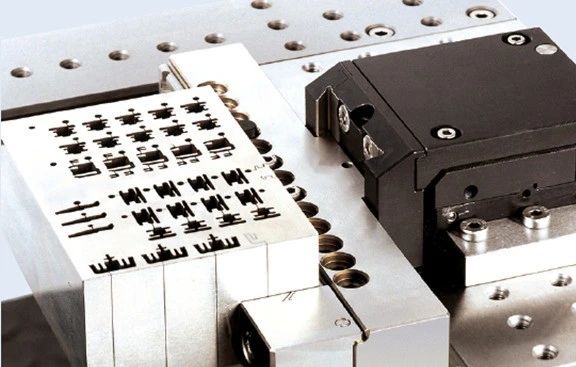
A cnc wire cut machine uses a thin electrode wire that travels continuously through the cutting zone. Because the process does not rely on direct cutting force between the tool and the workpiece, it is particularly useful for hardened steels, carbide and other conductive materials that may be difficult to machine conventionally.
Typical Wire EDM applications include:
punches and dies
precision profiles
narrow slots
gears and complex contours
mold inserts
hardened tooling components
parts requiring small corner radii
components requiring taper cutting
Wire EDM is especially valuable when a part has already been heat-treated. Conventional milling after hardening can increase tool wear and machining difficulty, while EDM can machine the conductive material without depending on conventional cutting hardness.
However, Wire EDM normally requires a path for the wire to pass through the workpiece. If the required feature is a blind cavity rather than a through-profile, Sinker EDM is usually the more appropriate choice.
When Should You Choose Sinker EDM?
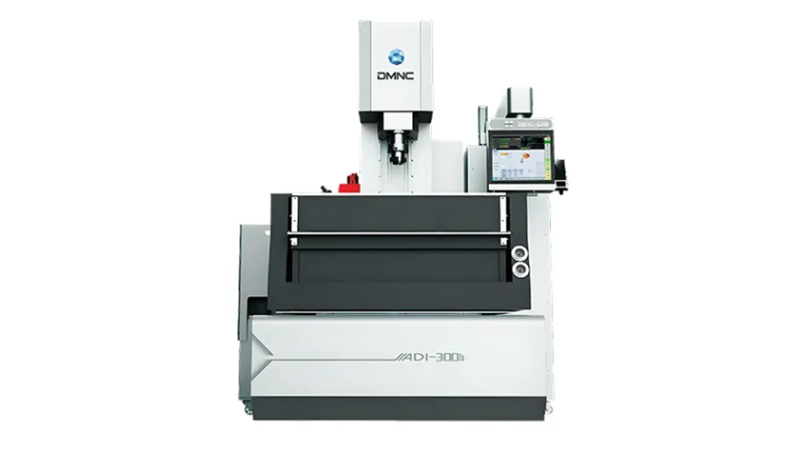
Sinker EDM is designed for three-dimensional cavities, blind features and complex internal geometries that cannot be produced simply by passing a wire through the workpiece.
Instead of using a continuous wire, a shaped electrode—commonly graphite or copper—is manufactured according to the required cavity geometry. Controlled electrical discharges reproduce the electrode shape in the workpiece.
A die sinker edm is particularly useful for applications such as:
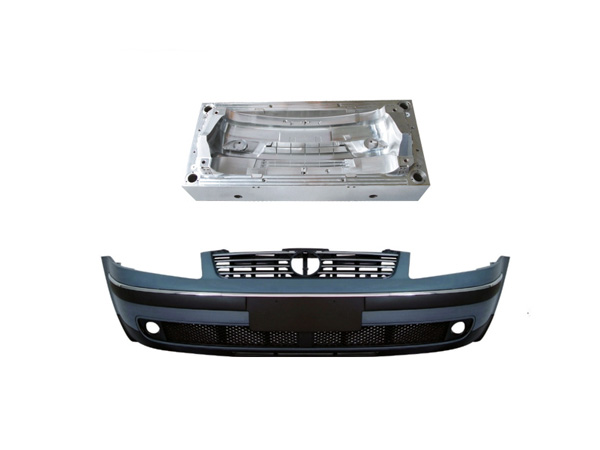
injection mold cavities
die-casting mold features
deep ribs
blind pockets
complex internal corners
logos, text and special cavity shapes
precision mold details that are difficult to mill
One of the main advantages of Sinker EDM is its ability to machine geometries that do not pass completely through the part. For mold manufacturing, this distinction is critical.
For example, a punch profile that needs to be cut completely through a steel plate is a natural Wire EDM application. A corresponding mold cavity that must remain closed at the bottom may require Sinker EDM.
Buyers considering Sinker EDM should also evaluate electrode preparation. Unlike Wire EDM, where the wire electrode is continuously supplied, Sinker EDM requires a shaped electrode to be designed and manufactured. Complex parts may require multiple electrodes for roughing and finishing.
This electrode preparation should be considered when evaluating overall process time, automation requirements and production cost.
When Should You Choose Small Hole EDM?
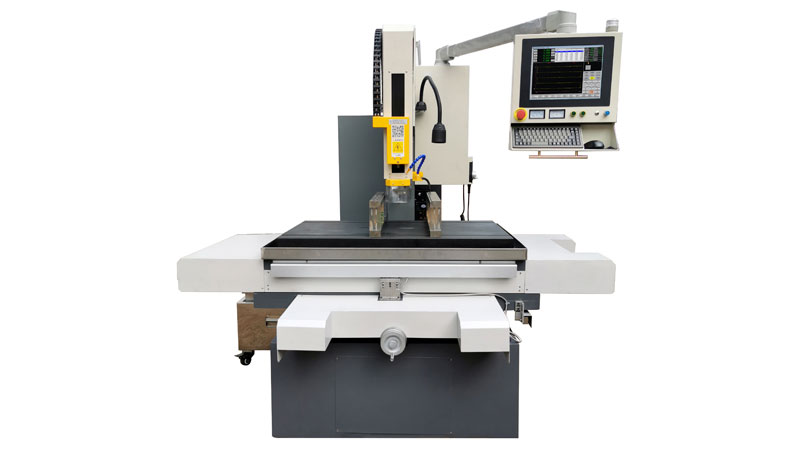
Small Hole EDM is designed specifically for producing small-diameter and high-aspect-ratio holes in electrically conductive materials.
A small hole drilling machine typically uses a rotating tubular electrode while dielectric fluid passes through the electrode to flush away eroded material.
Typical applications include:
Wire EDM start holes
turbine blade cooling holes
deep small holes
hardened tool steel components
mold vent holes
aerospace components
spinnerets and precision nozzles
holes in difficult-to-machine conductive alloys
One of the biggest advantages of Small Hole EDM is that it can produce holes in materials that may be challenging for conventional drills, especially after heat treatment.
It is also extremely important in Wire EDM production. If a Wire EDM contour begins inside a solid plate rather than from the outside edge, the wire needs an initial hole through which it can be threaded. Small Hole EDM is commonly used to create this start hole.
The process is therefore not necessarily a competitor to Wire EDM. In many factories, the two machines work together as part of the same production workflow.
Wire EDM vs Sinker EDM: Which Is Better for Mold Manufacturing?
Both Wire EDM and Sinker EDM are widely used in mold and die manufacturing, but they solve different machining problems.
The simplest way to decide is to look at whether the required geometry is a through-feature or a cavity.
For punches, blanking dies, extrusion profiles and other parts requiring a complete contour through the material, Wire EDM is usually more suitable. It can create precise profiles with narrow kerfs and small internal corner radii without applying significant cutting force to the workpiece.
For injection mold cavities, deep ribs and blind internal features, Sinker EDM normally provides greater geometric freedom because the electrode can reproduce a three-dimensional shape without cutting through the entire part.
Many mold shops therefore use both technologies.
A typical production route might involve:
CNC milling for removing the majority of material.
Wire EDM for precision inserts, punches and through-features.
Sinker EDM for cavities, sharp internal details and deep ribs.
Small Hole EDM where start holes, vent holes or deep narrow holes are required.
The best EDM technology is therefore not determined by which machine is “more advanced,” but by which process matches the geometry most efficiently.
Wire EDM and Small Hole EDM: Why Are They Often Used Together?
Wire EDM and Small Hole EDM are closely connected in many machining applications.
Suppose a manufacturer needs to create a closed internal profile in a hardened steel plate. The Wire EDM wire cannot simply begin cutting from the middle of solid material. A start hole must first be produced.
Small Hole EDM can create this initial opening. The Wire EDM wire is then threaded through the hole, and the machine completes the required contour.
This combination is particularly useful for:
closed die profiles
internal slots
precision inserts
hardened mold components
complex internal contours
Using Small Hole EDM rather than a conventional drill can also be beneficial when the material is already hardened or when the required start hole has a small diameter and significant depth.
For factories purchasing EDM equipment, this workflow is worth considering. A Wire EDM machine may handle the majority of contour machining, while a Small Hole EDM machine supports preparation and additional hole-making applications.
How Part Geometry, Tolerance and Material Determine the EDM Process
Choosing between different types of EDM machines becomes easier when the decision is based on four questions.
1. Is the material electrically conductive?
EDM requires an electrically conductive workpiece. Conductive hardened steels, tool steels, carbide and many conductive alloys can therefore be suitable candidates.
2. Is the required feature a profile, cavity or hole?
For a through-profile, consider Wire EDM.
For a blind cavity or complex three-dimensional internal shape, consider Sinker EDM.
For a small or deep hole, consider Small Hole EDM.
3. What tolerance and surface finish are required?
Higher precision may require multiple finishing passes, stable machine structure, precise servo control and carefully controlled discharge parameters. The required final surface finish can also affect machining time and machine configuration.
4. What is the expected production volume?
A tool room producing occasional precision parts may prioritize flexibility. A production factory may place more emphasis on automation, electrode changing, repeatability, programming efficiency and continuous operation.
These four questions provide a much better starting point than selecting an EDM machine based only on maximum travel or purchase price.
Which EDM Machine Should You Buy?
When evaluating CNC EDM machines, buyers should begin with the dominant type of work they expect the equipment to perform.
Choose Wire EDM when the majority of parts involve precise profiles, hardened dies, punches, through-slots or complex contours.
Choose Sinker EDM when the production focus is mold cavities, blind features, deep ribs or complex internal geometries.
Choose Small Hole EDM when the primary requirement is deep small holes, start holes, cooling holes or precision holes in difficult conductive materials.
For a mold-making factory, owning more than one EDM technology may provide the greatest flexibility. Wire EDM and Sinker EDM often complement one another, while Small Hole EDM can support both mold manufacturing and Wire EDM preparation.
Before requesting a quotation, buyers should provide the machine supplier with information such as:
workpiece material
maximum workpiece dimensions
required geometry
hole diameter and depth if applicable
required tolerance
target surface finish
production volume
automation requirements
representative part drawings
A supplier can then recommend the appropriate machine type and configuration rather than simply quoting the largest or most expensive model.
FAQ About EDM Machine Types
What are the three main types of EDM machines?
The three common types are Wire EDM, Sinker EDM and Small Hole EDM. Wire EDM is mainly used for profiles, Sinker EDM for cavities and Small Hole EDM for small or deep holes.
What is the main difference between Wire EDM and Sinker EDM?
Wire EDM uses a moving wire electrode and normally creates through-cuts or profiles. Sinker EDM uses a shaped electrode and can machine blind cavities and complex three-dimensional internal features.
Can Small Hole EDM replace Wire EDM?
No. They perform different operations. Small Hole EDM produces holes, while Wire EDM cuts contours. Small Hole EDM is often used to make the start hole required before Wire EDM cuts an internal profile.
Which EDM machine is best for mold manufacturing?
It depends on the mold feature. Wire EDM is well suited to punches, inserts and through-profiles, while Sinker EDM is more suitable for mold cavities, ribs and blind features. Many mold shops use both.
Can EDM machine non-conductive materials?
Conventional EDM processes require electrically conductive workpieces because material removal depends on electrical discharge between the electrode and the workpiece.
Conclusion
Wire EDM, Sinker EDM and Small Hole EDM share the same fundamental electrical discharge principle, but each is optimized for a different machining task.
Wire EDM is the logical choice for accurate through-profiles and complex contours. Sinker EDM is better suited to blind cavities and three-dimensional internal features. Small Hole EDM specializes in small, deep holes and also plays an important supporting role in Wire EDM machining.
For buyers, the best EDM machine is therefore not simply the machine with the largest working range, the highest number of axes or the lowest price. The right choice starts with the workpiece geometry, followed by material, tolerance, surface finish, production volume and automation requirements.
By matching the EDM process to the actual part rather than selecting equipment by specifications alone, manufacturers can improve machining efficiency, avoid unnecessary investment and build a more flexible EDM production process.
 GET STARTED