 English
 Español
The price of a Wire EDM machine cannot be judged by machine size alone. Two machines with similar working travel may have very different costs because machine structure, servo control, cutting accuracy, wire system, taper capability, surface finish requirements and automation level all affect the final configuration.
For industrial buyers, the better question is not simply “How much does a Wire EDM machine cost?” but rather “Which machine configuration can achieve the required accuracy, productivity and operating cost for my parts?” This guide explains the main factors behind Wire EDM pricing and provides a practical framework for comparing machines before requesting a quotation.
How Much Does a Wire EDM Machine Cost?
There is no single standard Wire EDM machine price that applies to every application. A machine designed for general-purpose cutting will normally have a different cost structure from a high-precision model built for tighter tolerances, multiple trim cuts and long-term accuracy stability.
When comparing a wire cut machine price, buyers should first identify the actual production requirement rather than choosing only by the lowest initial quotation.
The final price is usually influenced by factors such as machine structure, X/Y/Z working travel, maximum workpiece thickness, table load, servo configuration, cutting speed, multiple-cut capability, taper range, surface finish requirements, wire system and automation functions.
A lower-cost machine can be suitable for standard tool-room cutting, while a higher-specification machine may reduce secondary finishing, improve repeatability and support more demanding production. For this reason, quotations should always be compared on the basis of equivalent specifications and intended applications.
What Factors Affect Wire EDM Machine Price?
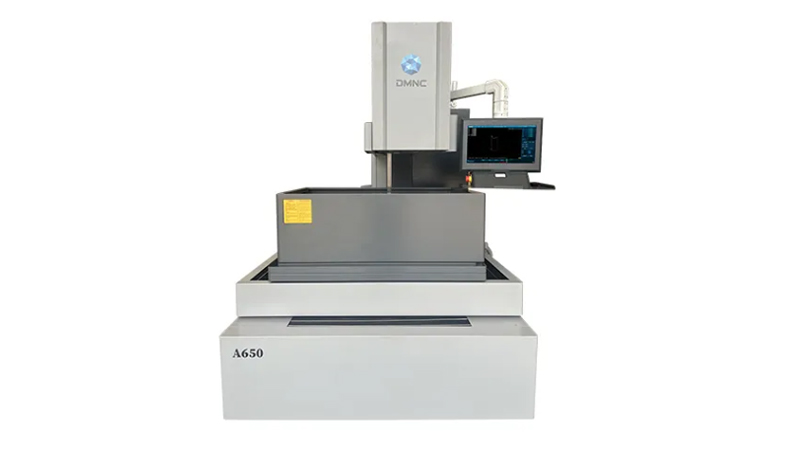
Machine rigidity, motion control and working range are among the biggest factors influencing Wire EDM machine cost.
A rigid machine body helps maintain geometric accuracy during long cutting cycles and when processing heavier workpieces. Precision-oriented machines may therefore use reinforced machine structures, servo-controlled axes, high-quality guideways and more sophisticated control systems. These additions can increase the initial price but are important when stable tolerance and repeatability are required.
Machine size also matters. Larger X/Y travel normally requires a larger machine bed, longer guideways, stronger ball screws and a higher-capacity worktable. Maximum workpiece thickness and table load can further affect structural requirements.
Buyers should therefore compare several specifications together rather than focusing on one number:
| Specification | Why It Matters |
| X/Y Travel | Determines the maximum cutting area |
| Z Travel | Affects workpiece height and setup flexibility |
| Table Size | Determines usable fixture and workpiece space |
| Maximum Load | Important for heavy molds and dies |
| Cutting Thickness | Determines whether thick workpieces can be processed |
| Taper Angle | Important for angled profiles and complex dies |
| Accuracy | Determines suitability for precision components |
| Multiple-Cut Capability | Affects final tolerance and surface finish |
Choosing a machine that is unnecessarily large or overly precise can increase investment without providing a practical production benefit. The machine configuration should therefore match the actual workpiece range and tolerance requirements.
High-Precision C-Structure vs General-Purpose F-Structure
One important purchasing decision is whether production requires a high-precision machine architecture or a more economical general-purpose configuration.
A high-precision cnc wire cutting machine is generally more suitable when machining requires tighter tolerances, stable repeatability, multiple trim cuts and better surface quality. A rigid structure and servo-controlled axes can help maintain machining stability during long production cycles.
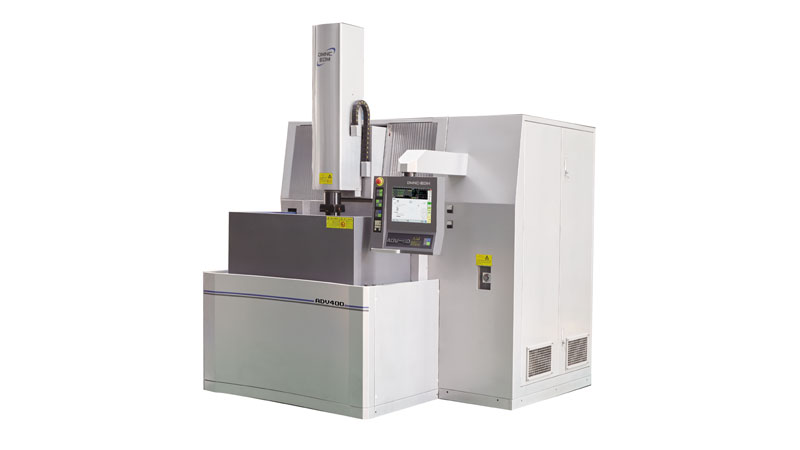
By comparison, a cnc high speed wire cut edm can be a practical choice for general mold making, thicker workpieces and production where cutting efficiency and investment control are important.
Neither structure is automatically better for every factory. A precision mold manufacturer may benefit from the additional rigidity and control of a C-structure machine, while a workshop handling general components and larger workpieces may obtain a better return from an F-structure model.
When comparing the two, buyers should consider:
required tolerance and repeatability
typical workpiece dimensions
maximum thickness
surface finish requirements
number of rough and trim cuts
production volume
available investment budget
This type of application-based comparison is more useful than selecting a machine simply because it has a higher specification.
How Accuracy, Cutting Speed and Surface Finish Affect Cost
Accuracy, speed and surface finish are closely related in Wire EDM machining, and improving one parameter can affect machine configuration and cost.
Higher accuracy requires stable machine geometry, reliable servo response, controlled wire tension, accurate axis movement and consistent dielectric conditions. If the machine is used for precision punches, dies or high-value components, these factors become more important than maximum cutting speed alone.
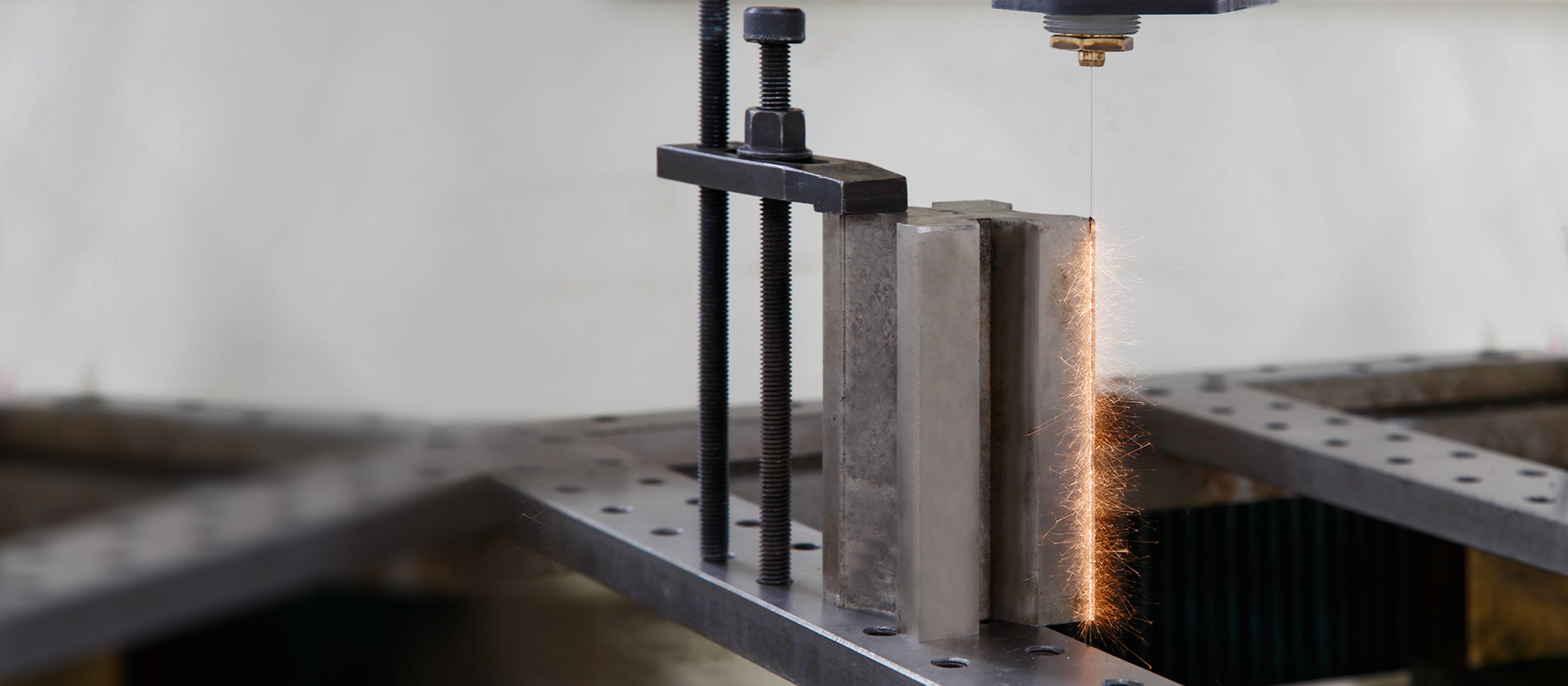
Multiple-cut capability is another important consideration. A rough cut removes material quickly, while subsequent trim cuts improve dimensional accuracy and surface finish. Machines designed for stable multi-cut machining require precise motion control and consistent discharge conditions, which may increase equipment cost.
Cutting speed should therefore never be evaluated in isolation. A machine may remove material quickly during the first cut but require additional finishing steps if the resulting accuracy or surface condition does not meet the production requirement.
For industrial buyers, the more useful performance measure is:
acceptable cutting speed at the required tolerance and surface finish.
This helps prevent overpaying for speed that does not improve final part productivity.
How Wire System and Consumables Affect Total Cost
The machine purchase price is only one part of the investment. Consumables and routine maintenance can significantly affect long-term Wire EDM operating cost.
Depending on machine design and production conditions, operating expenses may include electrode wire, wire guides, electrical contacts, filters, working fluid, pumps, seals and other wear components.
Wire EDM systems may also use different electrode-wire approaches, including brass wire and reusable molybdenum wire systems. These systems have different machine architectures, consumable patterns and operating economics.
For example, one system may have a higher initial purchase cost but lower consumable usage in a certain production environment, while another may provide better productivity or surface quality for a specific application.
Therefore, buyers should compare:
machine price + consumable cost + maintenance cost + expected productivity
rather than judging equipment purely by the initial quotation.
Machine Price vs Total Cost of Ownership
A more accurate way to compare Wire EDM machines is to evaluate total cost of ownership, or TCO.
A simplified calculation can be expressed as:
TCO = Machine Investment + Consumables + Energy + Maintenance + Labor + Downtime
A lower-priced machine may appear attractive during purchasing but become expensive if it requires frequent adjustment, causes unstable cutting or creates excessive downtime.
Conversely, the highest-specification machine is not automatically the most economical option. If a workshop mainly produces standard components with moderate tolerances, paying for advanced precision functions that are rarely used may not generate a meaningful return.
Before purchasing, buyers should estimate annual machining hours, typical workpiece thickness, required tolerance, expected number of trim cuts, consumable consumption, maintenance frequency and machine utilization.
Total cost per finished part is often a more meaningful metric than the purchase price alone.
How to Choose the Right Wire EDM Machine for Your Production
The correct machine should be selected according to the parts being manufactured and the production environment.
For mold and die manufacturing, priority is usually placed on dimensional stability, taper cutting, repeatability and multiple-cut performance. High-precision parts may require stronger machine rigidity, tighter wire control and better surface finish capability.
For general tool-room production, buyers may place greater value on flexible working range, reliable cutting speed, simple operation and economical maintenance.
Large or thick workpieces require careful attention to maximum cutting thickness, table load, machine travel and structural rigidity. In these applications, selecting a machine with insufficient capacity can limit future production flexibility.
Production volume is also important. A workshop running occasional EDM jobs has different requirements from a factory operating the machine continuously across multiple shifts.
The selection process should therefore begin with five questions:
What is the maximum workpiece size and thickness?
What tolerance must the machine consistently achieve?
What surface finish is required?
How many parts will be processed each day or month?
Is flexibility or maximum precision more important for the application?
Answering these questions makes it much easier to identify an appropriate machine configuration without overspending.
What Information Should You Provide for a Wire EDM Quote?
A detailed RFQ helps a supplier recommend the correct model and prevents buyers from comparing machines that are technically different.
Whenever possible, provide:
workpiece material
maximum workpiece dimensions
typical workpiece thickness
required dimensional tolerance
required surface finish
maximum taper angle
expected production volume
rough-cut and trim-cut requirements
preferred level of automation
local electrical standard
factory installation conditions
For more demanding projects, a representative drawing or sample part is especially useful. It allows the supplier to evaluate travel, thickness, accuracy, taper and cutting strategy more accurately.
Instead of asking only “What is your Wire EDM price?”, a more effective RFQ is:
“Which machine configuration would you recommend for this workpiece, and which specifications have the greatest effect on the quotation?”
This produces a quotation that is easier to evaluate technically and commercially.
FAQ About Wire EDM Machine Price
Why do Wire EDM machine prices vary so much?
Prices vary because working travel, machine structure, servo control, accuracy, cutting thickness, taper capability, surface finish and automation can differ considerably between models.
Does a larger Wire EDM machine always cost more?
Larger machines generally require larger structures and motion systems, but machine precision, control system and automation level can also have a major influence on price.
Is a high-precision Wire EDM worth the extra investment?
It can be when production requires tight tolerances, stable repeatability, multiple trim cuts or better surface finish. For standard cutting applications, a general-purpose machine may offer a better return on investment.
Does higher cutting speed always mean a better machine?
No. Cutting speed should be evaluated together with accuracy, surface finish and process stability. The real goal is to produce acceptable parts efficiently, not simply achieve the highest rough-cut speed.
How can I get an accurate Wire EDM machine quotation?
Provide the supplier with workpiece material, dimensions, thickness, tolerance, surface finish, taper requirements, production volume and local power conditions. A detailed RFQ usually results in a more accurate machine recommendation and quotation.
Conclusion
Wire EDM machine price is determined by much more than machine size. Structure, working travel, servo system, cutting thickness, accuracy, surface finish, multiple-cut capability and long-term operating cost all affect the true value of the equipment.
For buyers, the best approach is to begin with the workpiece and production requirement, then compare machine configurations on the same technical basis. A general-purpose Wire EDM may be ideal for cost-efficient everyday production, while a high-precision C-structure machine may be more appropriate when repeatability, fine surface finish and demanding tolerances are critical.
By comparing both the initial machine price and total cost of ownership, manufacturers can select a Wire EDM machine that provides the required machining performance without unnecessary investment.
 GET STARTED